
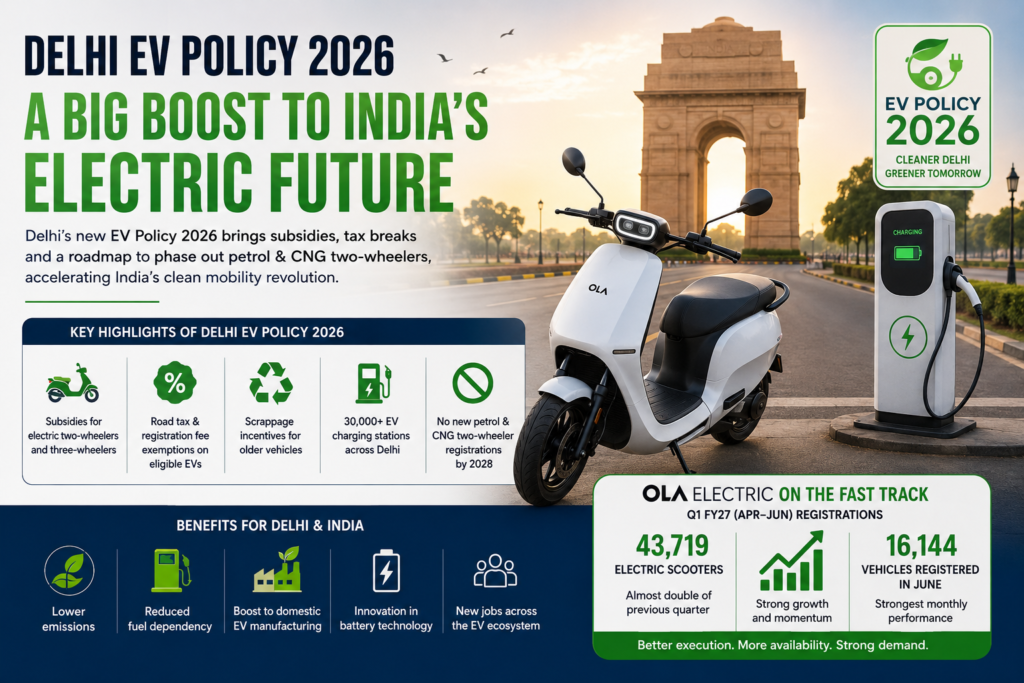
New Delhi, July 2, 2026: India’s transition toward electric mobility has received a major boost after the Delhi government unveiled its EV Policy 2026, introducing a comprehensive package of subsidies, tax incentives, and infrastructure expansion aimed at accelerating electric vehicle (EV) adoption across the national capital.
The policy is being viewed as one of the country’s most ambitious clean mobility initiatives, with the government outlining plans to gradually phase out registrations of new petrol and CNG-powered two-wheelers over the next two years while encouraging consumers to switch to electric alternatives. Industry experts believe the move could significantly strengthen India’s EV ecosystem and improve long-term demand for electric vehicles.
Key Highlights of Delhi EV Policy 2026
The newly announced policy includes several measures designed to make EV ownership more affordable and convenient:
- Financial subsidies for eligible electric two-wheelers and three-wheelers.
- Road tax and registration fee exemptions for qualifying electric vehicles.
- Scrappage incentives for replacing older internal combustion engine (ICE) vehicles with EVs.
- Expansion of public charging infrastructure, targeting more than 30,000 charging stations across Delhi.
- A roadmap to stop registrations of new petrol and CNG two-wheelers by 2028 while encouraging a complete shift toward cleaner mobility.
The Delhi government has also proposed investments worth nearly ₹15,000 crore over the coming years to strengthen EV infrastructure and promote sustainable transportation.
Ola Electric Emerges as an Early Beneficiary
The policy announcement comes as Ola Electric reports a sharp recovery in vehicle registrations.
According to the company’s latest update based on VAHAN registration data, Ola Electric registered 43,719 electric scooters during the April–June quarter (Q1 FY27), almost double the 22,252 units recorded in the previous quarter.
June alone witnessed registrations of 16,144 vehicles, marking the company’s strongest monthly performance in recent quarters.
The company attributed the growth to:
- Improved retail execution
- Better product availability
- Strong customer demand
- Operational improvements across its distribution network
The recovery signals renewed momentum after a relatively weak March quarter and positions Ola Electric to benefit from supportive government policies promoting EV adoption.
Why the Policy Matters
India remains one of the world’s fastest-growing automobile markets, and two-wheelers account for a significant share of daily transportation.
With fuel prices remaining volatile and air pollution continuing to challenge major cities like Delhi, government incentives are expected to improve the total cost of ownership for electric vehicles, making them increasingly attractive to consumers.
The policy is also expected to:
- Reduce vehicular emissions
- Lower dependence on fossil fuels
- Increase domestic EV manufacturing
- Encourage battery technology innovation
- Expand charging infrastructure
- Create new employment opportunities across the EV value chain
Challenges Ahead
While the policy has been welcomed by industry stakeholders, experts believe successful implementation will depend on several factors, including:
- Rapid deployment of charging stations
- Reliable battery recycling systems
- Affordable financing options
- Stable supply chains for batteries and critical minerals
- Consumer awareness regarding EV ownership
Recent studies also suggest that many Indian households may still require electrical upgrades to safely support home EV charging, highlighting the need for complementary infrastructure investments.
Industry Outlook
The Delhi EV Policy 2026 is expected to serve as a blueprint for other Indian states considering similar clean mobility initiatives.
With supportive government policies, improving charging infrastructure, and rising consumer acceptance, India’s electric vehicle market appears poised for its next phase of growth. Companies such as Ola Electric, alongside other established and emerging EV manufacturers, are likely to benefit as the country’s transition toward sustainable transportation accelerates.
As India pushes closer to its climate and emission reduction goals, Delhi’s latest EV policy could prove to be a defining milestone in the nation’s electric mobility journey.
External Sources
- Delhi EV Policy 2026 Explained: Times of India
- Delhi Cabinet Approves New EV Policy: Economic Times
- Ola Electric Q1 Registration Update: The New Indian Express
- Ola Electric Sales Recovery Report: The Economic Times
- Reuters Report on Delhi’s EV Incentives: Reuters