
New Delhi, July 2, 2026: India’s digital economy continues to gather momentum, with the country’s flagship Unified Payments Interface (UPI) maintaining record-breaking transaction volumes even as regulators tighten oversight of emerging technology features.
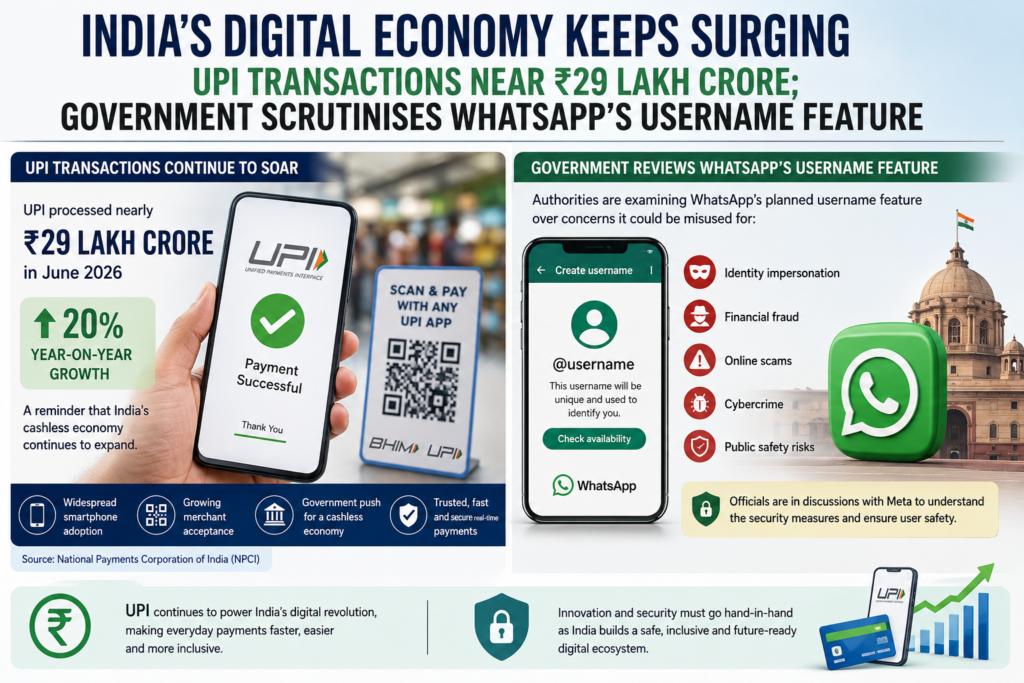
According to the latest data released by the National Payments Corporation of India (NPCI), UPI processed transactions worth nearly ₹29 lakh crore in June 2026. Although transaction volumes eased slightly from May’s all-time high, the value of transactions still recorded around 20% year-on-year growth, highlighting the continued expansion of India’s cashless economy.
The latest figures reinforce India’s position as one of the world’s fastest-growing digital payments markets, driven by widespread smartphone adoption, affordable internet access, and increasing merchant acceptance of QR-based payments.
The official UPI transaction statistics are available on the NPCI UPI Product Statistics portal.
UPI Continues to Dominate India’s Payments Landscape
UPI has transformed the way millions of Indians make everyday payments—from grocery purchases and utility bills to online shopping and business transactions.
Industry analysts believe several factors continue to fuel this rapid growth:
- Rising adoption of digital payments in Tier-II and Tier-III cities
- Government initiatives promoting a cashless economy
- Increased merchant acceptance through QR codes
- Expansion of digital banking services
- Growing consumer trust in real-time payment systems
Despite a marginal decline in monthly transaction count compared with May, June’s performance demonstrates that digital payments remain firmly embedded in India’s financial ecosystem.
More details about India’s digital payment ecosystem can be found on the Reserve Bank of India (RBI) website.
Government Reviews WhatsApp’s Planned Username Feature
Alongside the rapid growth of digital services, the government is also increasing scrutiny of new technology features introduced by major digital platforms.
Officials are reportedly examining WhatsApp’s proposed username feature, which would allow users to connect without sharing their mobile numbers publicly.
While privacy advocates view usernames as an additional layer of user protection, government agencies have reportedly raised concerns that anonymous usernames could be exploited for:
- Identity impersonation
- Financial fraud
- Online scams
- Cybercrime
- Public safety risks
Authorities are evaluating whether additional safeguards may be necessary before the feature is introduced widely in India.
According to media reports, officials are discussing the issue with Meta, WhatsApp’s parent company, to better understand the security measures planned for the rollout.
Read more about WhatsApp’s latest product developments on the Meta Newsroom
Balancing Innovation with User Safety
India has emerged as one of the largest markets for digital platforms, making regulatory oversight increasingly important as technology companies introduce new features.
Experts believe striking the right balance between innovation, user privacy, and public safety will remain a key policy priority.
Digital identity protections have become especially significant as cyber fraud cases continue to rise alongside increased digital adoption.
The government has recently emphasized stronger compliance with the Digital Personal Data Protection Act and enhanced cybersecurity practices across digital service providers.
Information on India’s digital governance initiatives is available through the Ministry of Electronics and Information Technology (MeitY)
Outlook
India’s digital transformation shows no signs of slowing.
While UPI continues to process trillions of rupees every month and strengthens the country’s transition toward a less-cash economy, regulators are simultaneously working to ensure that new technology features do not create opportunities for fraud or misuse.
Going forward, both innovation and responsible regulation are expected to shape the next phase of India’s digital economy, ensuring secure growth for consumers, businesses, and technology platforms alike.
Sources
- NPCI UPI Statistics: https://www.npci.org.in/what-we-do/upi/product-statistics
- Reserve Bank of India: https://www.rbi.org.in/
- Meta Newsroom: https://about.fb.com/
- Ministry of Electronics & IT (MeitY): https://www.meity.gov.in/
- Reuters coverage on UPI and WhatsApp regulatory developments: https://www.reuters.com/