
Corporate Tax in India 2026: Everything Every Business Owner Must Know
Running a business involves more than increasing sales and managing expenses. Every registered company must also comply with tax laws, and one of the most important obligations is paying Corporate Tax in India. Whether you own a startup, MSME, private limited company, or multinational corporation, understanding corporate taxation helps you reduce tax liability, remain compliant, and avoid unnecessary penalties.
In this comprehensive guide, we’ll explain Corporate Tax in India, applicable tax rates, available deductions, tax-saving opportunities, filing requirements, and common mistakes businesses should avoid in 2026.
Table of Contents
What is Corporate Tax in India?
Corporate Tax in India refers to the income tax imposed on the profits earned by companies registered under the Companies Act. Every domestic and foreign company operating in India must pay tax on taxable income according to the provisions of the Income-tax Act, 1961.
Unlike individual income tax, corporate tax applies specifically to businesses and corporate entities.
Businesses should regularly refer to the Income Tax Department official website:
The Income Tax Act governing corporate taxation can also be accessed here:
Who is Required to Pay Corporate Tax?
The following entities are liable to pay Corporate Tax in India:
- Private Limited Companies
- Public Limited Companies
- One Person Companies (OPCs)
- Foreign Companies operating in India
- Government Companies
- Section 8 Companies (subject to applicable provisions)
Every company earning taxable income must calculate and pay Corporate Tax in India according to applicable tax provisions.
Corporate Tax Rates in India for 2026
The tax rate depends upon the type of company and the taxation regime selected.
Domestic Companies
Most domestic companies may opt for different tax regimes subject to prescribed conditions under the Income-tax Act.
The effective tax liability generally includes:
- Basic Corporate Tax
- Surcharge (if applicable)
- Health & Education Cess
Companies opting for concessional tax regimes may not be eligible for several exemptions and deductions.
Always verify the latest rates from the official Income Tax portal before filing returns.
Foreign Companies
Foreign companies earning income from India are taxed differently depending upon:
- Nature of income
- Permanent Establishment
- Tax treaties (DTAA)
- Applicable provisions of the Income-tax Act
Businesses should carefully evaluate Double Taxation Avoidance Agreements before computing tax liability.
How Corporate Taxable Income is Calculated
The taxable income of a company is calculated as:
Gross Revenue
Less:
- Business Expenses
- Depreciation
- Employee Costs
- Interest Expenses
- Eligible Deductions
- Carry Forward Losses
Equals:
Taxable Business Income
The resulting amount becomes subject to Corporate Tax in India.
Allowable Business Deductions
One of the best ways to reduce Corporate Tax in India legally is by claiming eligible deductions.
Common deductions include:
Employee Expenses
- Salaries
- Bonus
- PF Contribution
- ESI Contribution
- Staff Welfare
Office Expenses
- Rent
- Electricity
- Internet
- Repairs
- Office Supplies
Business Promotion
- Advertising
- Marketing
- Website Development
- Social Media Campaigns
Professional Charges
- Chartered Accountant Fees
- Legal Fees
- Consultancy Charges
Depreciation
Depreciation on machinery, equipment, furniture, computers, and vehicles is allowable as prescribed under the Income-tax Act.
Tax Saving Strategies for Companies
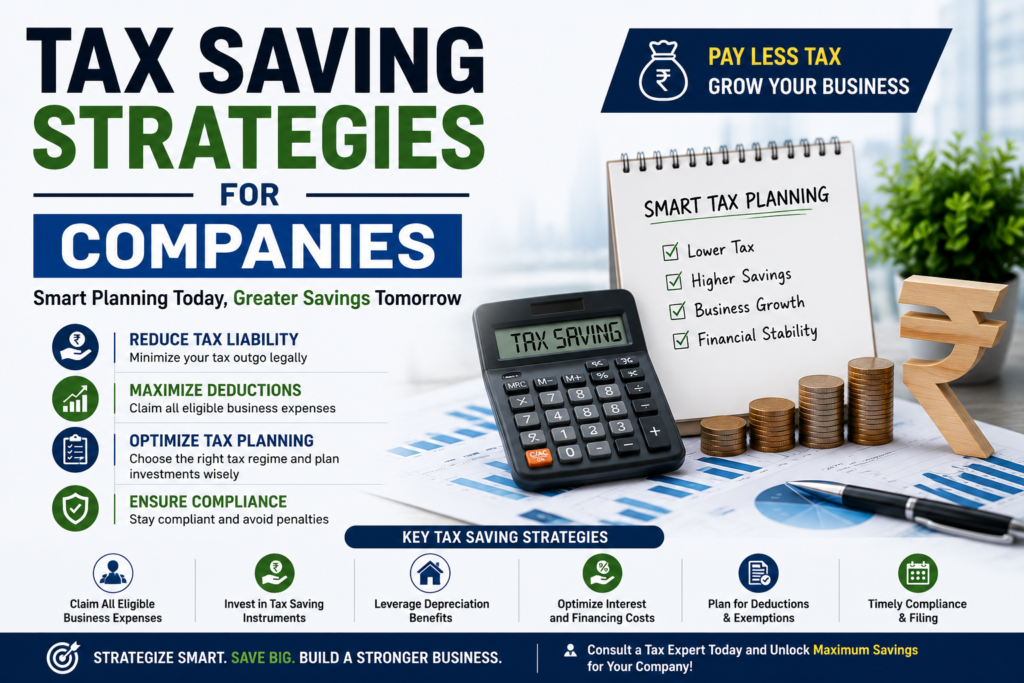
Every company should adopt legal tax planning methods.
Some effective ways include:
Choose the Appropriate Tax Regime
Evaluate whether the regular regime or concessional corporate tax regime offers greater tax savings.
Maintain Proper Books of Accounts
Accurate accounting ensures every eligible deduction is claimed.
Invest in Business Assets
Depreciation benefits can significantly reduce taxable profits.
Claim Eligible Expenses
Only genuine business expenses supported by invoices should be claimed.
File Returns on Time
Late filing can lead to penalties, interest, and delayed processing.
Proper tax planning can substantially reduce Corporate Tax in India without violating tax laws.
Corporate Tax Compliance Requirements
Every company must fulfill several compliance requirements.
These include:
- Maintaining books of accounts
- Conducting statutory audit where applicable
- Filing Income Tax Return
- Payment of Advance Tax
- TDS Compliance
- GST Compliance (where applicable)
- Tax Audit (if required)
Failure to comply may result in notices and financial penalties.
Advance Tax for Companies
Companies are generally required to pay Advance Tax in installments if their tax liability exceeds the prescribed threshold.
Timely payment helps avoid:
- Interest under Section 234B
- Interest under Section 234C
Businesses should estimate profits periodically throughout the financial year.
Common Mistakes Companies Should Avoid
Many businesses pay higher Corporate Tax in India simply because of avoidable mistakes.
Some common errors include:
- Missing allowable deductions
- Incorrect depreciation claims
- Late filing of returns
- Poor bookkeeping
- Incorrect TDS reporting
- Claiming unsupported expenses
- Ignoring advance tax obligations
Maintaining proper accounting records minimizes these risks.
Why Professional Tax Planning Matters
Corporate taxation has become increasingly complex with changing regulations and multiple tax regimes.
Professional tax consultants help businesses by:
- Reducing tax liability legally
- Ensuring complete compliance
- Avoiding notices
- Representing companies before tax authorities
- Preparing tax computations
- Filing returns accurately
Professional guidance often saves significantly more than the cost of tax advisory services.
Recent Developments Businesses Should Watch
Corporate tax regulations continue to evolve through:
- Annual Union Budget announcements
- CBDT Circulars
- Judicial decisions
- Digital compliance initiatives
Businesses should regularly monitor updates from:
CBDT
https://www.incometaxindia.gov.in
Income Tax Portal
Why Businesses Should Prioritize Corporate Tax Compliance
Ignoring Corporate Tax in India can lead to:
- Heavy penalties
- Interest liability
- Tax notices
- Litigation
- Financial losses
- Reputation damage
Timely compliance enhances business credibility with investors, lenders, and regulatory authorities.
Final Thoughts
Understanding Corporate Tax in India is essential for every business aiming for sustainable growth. Proper tax planning, accurate accounting, timely return filing, and claiming eligible deductions can significantly reduce tax liability while ensuring complete legal compliance.
Whether you’re a startup founder, MSME owner, or managing a large corporation, investing time in understanding Corporate Tax in India can improve profitability and reduce compliance risks. Since tax laws evolve regularly, businesses should always stay updated with official notifications and seek professional guidance when needed.
If your company requires expert assistance with Corporate Tax in India, tax planning, return filing, or compliance, Horizon Accounting & Tax can help you navigate the process efficiently and maximize legitimate tax savings.